If you operate a construction business or hire labor in the Sunshine State, understanding Florida OSHA regulations is not optional: it’s essential. Whether you’re a general contractor, subcontractor, staffing agency, or business owner managing temporary crews, workplace safety compliance directly affects your legal risk, insurance costs, project timelines, and reputation.
For companies across Florida’s booming construction, manufacturing, and event industries, knowing how federal and state safety rules apply can prevent costly penalties and, more importantly, protect workers from serious injury.
In this guide, we’ll break down what employers and contractors need to know about Florida OSHA regulations, how Florida OSHA laws apply to your job sites, and how partnering with a knowledgeable staffing provider like Tower Eight Staffing can support safer, more compliant operations.
What Are Florida OSHA Regulations?
When people say Florida OSHA regulations, they’re usually talking about the workplace safety rules that apply to most employers in Florida, especially private-sector businesses like construction companies, manufacturers, warehouses, and event crews.
Here’s the key thing to know: Florida does not run its own OSHA “state plan.” That means federal OSHA (under the U.S. Department of Labor) is the main authority that enforces workplace safety standards for private employers in Florida.
So, to put it simply:
- Federal OSHA writes the rules
- Federal OSHA enforces the rules in Florida
- Most private employers and workers in Florida fall under that federal system
Florida OSHA Laws vs. Florida OSHA Regulations: What’s the Difference?
How “Florida OSHA Laws” Fit Into the Picture
People often search for Florida OSHA laws when they really mean: “What safety rules do I have to follow in Florida?”
Even though OSHA standards are federal, Florida employers may also need to follow:
- State-level rules that apply to certain industries or job sites
- Local requirements (like permitting or job-site rules that affect safety planning)
- Industry standards and best practices that support compliance (like manufacturer requirements, ANSI guidance, and training expectations)
Think of it like this: OSHA is the main safety rulebook, but your specific job site might have extra rules layered on top.
And yes, Florida OSHA regulations still apply even when you’re using subcontractors, temp workers, or multiple crews on one site.
Who Has to Follow Florida OSHA Regulations?
In general, Florida OSHA regulations cover most private-sector employers and workers in the state.
That includes:
- Construction companies (GCs and subs)
- Staffing agencies
- Manufacturing plants
- Warehousing and distribution operations
- Event and production crews
- Many service businesses with workplace hazards
What about state and local government workers?
Federal OSHA generally does not cover state and local government employees unless the state has an OSHA-approved plan, and Florida does not have one.
Why This Matters for Employers and Contractors in Florida
If you hire workers in Florida, OSHA expectations can show up in your world in very real ways:
- Job-site inspections can be unannounced
- Training and documentation can be requested quickly
- Hazards like falls, trenching, electrical work, heat exposure, forklifts, and PPE get a lot of attention (especially in construction)
For contractors, the big takeaway is simple: if you control the job site or direct the work, you’re expected to manage safety.
Special Note for Staffing: Shared Responsibility
If you use temp labor or place workers on job sites, here’s a critical point:
Staffing agencies and host employers are jointly responsible for temporary worker safety.
That means OSHA can hold both parties responsible for issues like:
- Lack of hazard training
- Missing PPE
- Poor hazard communication
- Unsafe work conditions
So if you’re a contractor using staffing support, you want clear alignment on things like:
- Who provides PPE?
- Who does the site-specific safety orientation?
- Who trains the worker on the specific task?
- Who supervises day-to-day safety?
This is one reason many Florida employers prefer staffing partners who understand job-site expectations and help keep safety communication clean and consistent.
Understanding Florida OSHA Laws for Employers
Here’s the simple truth: when most people say “Florida OSHA laws,” they’re usually talking about federal OSHA rules that apply in Florida. Florida does not run its own OSHA “state plan” for private employers, so workplace safety enforcement for most private businesses is handled under federal OSHA.
That matters because it means the core rules you need to follow come straight from OSHA’s federal standards (like construction rules under 29 CFR 1926), and OSHA can inspect, investigate incidents, and issue citations on Florida job sites.
What employers in Florida are responsible for
If you hire workers in Florida, full-time, part-time, temp, or subcontracted, you’re expected to:
- Provide a workplace free of recognized serious hazards (this is OSHA’s “General Duty” concept)
- Train workers on the hazards they’ll face
- Provide or ensure proper PPE (like hard hats, eye protection, gloves, high-vis vests, fall arrest gear)
- Keep safety documentation (training records, inspections, incident logs where required)
- Report serious incidents to OSHA within the required time limits (more on that below)
Proper documentation goes beyond a basic checklist — reviewing the OSHA 301 form requirements and reporting steps can help employers understand exactly what incident records need to look like.
If you’re a contractor, you also need to think about multi-employer job sites where multiple companies share a site, and safety responsibilities can overlap.
How Florida OSHA Laws Apply to Construction and Contracting
Construction is one of the most regulated industries under OSHA, and Florida construction sites get extra attention because the risk factors can stack up fast: heights, heat, storms, tight timelines, heavy equipment, and multiple trades working at once.
Even though OSHA is federally administered in Florida, many employers search for guidance on Florida OSHA laws because they want to understand how those federal standards translate to real-world job sites, like roofs, scaffolds, road work, commercial builds, and cleanup/remediation work after storms.
The OSHA construction standards (29 CFR 1926) focus heavily on these hazard areas
1. Fall protection (a top priority)
Falls are one of the fastest ways a job turns into a life-changing injury, or an inspection.
- OSHA requires fall protection in many situations at 6 feet or more in construction (for example, unprotected sides/edges, leading-edge work, roofing in many scenarios).
- Personal fall arrest systems must be used correctly (anchorage, harness fit, lanyard setup, and limiting free-fall distance).
Real-world Florida examples: roofing crews, second-story framing, balcony installs, commercial builds with open edges, and re-roof work after hurricane damage.
2. Scaffolding
Scaffolds create risk when they’re rushed, overloaded, or set on unstable ground.
Common OSHA focus points include:
- Proper assembly and bracing
- Guardrails and safe access
- Load limits and plank condition
- Competent-person oversight
Florida twist: sandy soil, sudden rain, and wind gusts can make scaffold stability a bigger issue than teams expect.
3. Ladders
Ladder issues can seem “small,” but they cause a lot of injuries.
Best practice expectations include:
- Right ladder for the task (height rating + duty rating)
- Stable setup and safe angle
- No “top step” standing
- Three points of contact
- Keeping ladders out of walk paths when possible
4. Electrical safety
Electrical hazards show up everywhere: temporary power, extension cords, generators, and unfinished electrical systems.
On construction sites, OSHA cares about:
- GFCI protection where required
- Proper grounding
- Cord condition and routing
- Lockout/tagout concepts for equipment and systems
Florida twist: wet conditions, storm cleanup work, and humid environments raise shock risk.
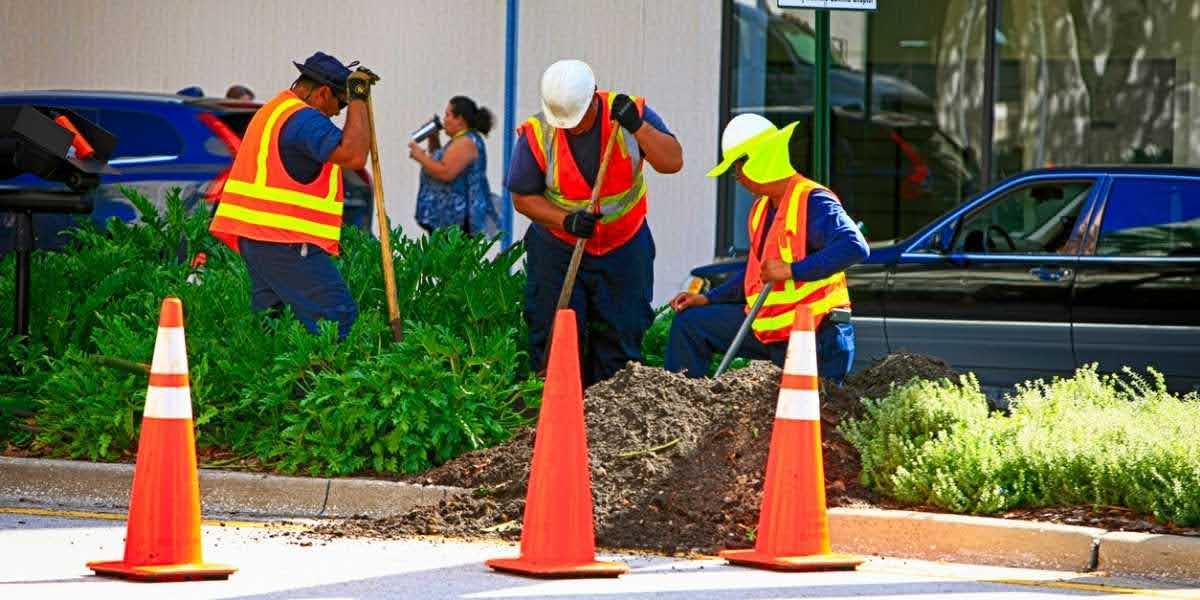
5. Trenching and excavation
Trenching is extremely dangerous when protective systems are ignored.
OSHA often focuses on:
- Cave-in protection (sloping, shoring, shielding)
- Safe access/egress
- Soil classification
- Water accumulation control
- Competent-person inspections
Florida twist: soil and water table conditions can change quickly, especially after heavy rain.
6. Personal protective equipment (PPE)
PPE isn’t just “have it.” It’s also:
- Choosing the correct PPE for the hazard
- Training workers on proper use
- Replacing damaged gear
- Enforcing use consistently
Typical construction PPE includes: hard hats, safety glasses, gloves, hearing protection, respirators (when needed), and high-vis gear.
7. Hazard communication (HazCom)
If your team uses chemicals (adhesives, solvents, paints, fuel, cleaners), OSHA expects:
- Safety Data Sheets (SDS) available
- Proper labeling
- Worker training on hazards and safe handling
8. Heavy equipment operation
Equipment safety usually comes down to training + routines:
- Operator qualification/training
- Spotters and clear signals
- Backup alarms and visibility plans
- Maintenance checks
- Keeping workers out of “swing zones” and pinch points
Florida OSHA laws for most private employers are enforced under federal OSHA, and construction rules under 29 CFR 1926 heavily focus on fall protection, scaffolding, ladders, electrical safety, trenching, PPE, hazard communication, and equipment operation. Florida employers should also plan for region-specific hazards like extreme heat and storm-related risks.
Key OSHA Requirements Florida Employers Should Know
If you run a jobsite in Florida, like construction, manufacturing, warehousing, or even event build-outs, these core safety rules are the ones that most often show up during inspections and incident reviews. While people commonly search for Florida OSHA regulations, it helps to remember that Florida is under federal OSHA (not a separate state OSHA plan), so the standards come from OSHA’s federal rules and guidance.
Below is a thorough, plain-English breakdown, plus practical tips, simple checklists, and quick answers to common questions employers and contractors ask.
1. Fall Protection Standards
Falls are one of the most serious hazards on construction sites, and OSHA’s fall protection rules are very specific. In general, OSHA requires fall protection when workers are on a walking/working surface with an unprotected side or edge 6 feet or more above a lower level.
Where fall protection commonly applies:
- Unprotected edges and sides (platforms, decks, mezzanines, open floors) at 6 feet or more
- Roofing work (both low-slope and steep roofs have specific options and rules)
- Scaffold platforms (plus guardrails and proper access)
- Openings and holes (like skylights, floor openings, and other gaps that workers could fall through)
What “fall protection” can mean on a Florida jobsite:
OSHA recognizes several main ways to protect workers, including:
- Guardrail systems
- Safety net systems
- Personal fall arrest systems (PFAS: harness, lanyard, anchor point, etc.)
Why this matters:
A fall protection miss can become a major citation fast, especially if it’s a clear 6-foot exposure with no system in place. Beyond penalties, it’s one of those hazards where a “minor” slip can become a life-changing injury.
Quick fall protection checklist (job-ready):
- Identify edges, holes, roof areas, and elevated surfaces before work starts
- Choose a protection method (guardrail, PFAS, etc.) and confirm it matches the task
- Confirm anchor points are rated and installed correctly (don’t “guess” anchors)
- Train workers on proper harness fit and tie-off rules
- Have a rescue plan (if someone falls and is suspended, you need a plan immediately)
Common question: “Do ladders count as fall protection?”
Ladders have their own safety rules. A ladder is not the same as fall protection on an exposed edge or roof. Many fall incidents happen because a ladder is used in a situation where a different system should have been installed.
2. Heat Illness Prevention
Florida’s heat and humidity can turn a normal workday into a real medical risk. OSHA emphasizes a simple core message for preventing heat illness: Water. Rest. Shade.
Why Florida employers need to be extra serious here:
- Long hot seasons (not just a few summer weeks)
- High humidity that makes it harder for the body to cool down
- Outdoor and semi-outdoor work (roofs, roadwork, concrete, framing, event staging)
OSHA-backed steps employers should implement:
- Hydration policies (easy access to cool drinking water)
- Rest breaks that increase as heat stress rises
- Shade or cool-down areas for recovery
- Training so workers and supervisors can recognize early symptoms and respond quickly
- Acclimatization plans, especially for new workers or workers returning after time off (this is when risk spikes)
Real-world examples of “heat illness prevention” that work:
- A morning “heat plan” huddle: forecast + work pacing + break schedule
- Buddy system: workers look out for symptoms in each other
- Mandatory cool-down breaks after high-exertion tasks (rebar tying, roofing tear-off, asphalt, etc.)
- New worker ramp-up: don’t throw a new hire into full-speed work in extreme heat on day 1
Heat symptoms workers should know (and employers should train on):
- Heat cramps, heavy sweating, dizziness
- Headache, nausea, confusion
- Fainting or acting “not like themselves”
These can escalate fast. When in doubt: stop work, cool down, and seek medical help.
Common question: “Is heat safety really part of Florida OSHA regulations?”
Yes: OSHA actively enforces heat hazards through its general duty expectations and published heat safety guidance, and Florida employers should treat it like a core program because of the climate.
3. Hazard Communication (HazCom): Chemicals, Labels, and SDS
Hazard Communication is one of the most overlooked “paperwork” requirements, until there’s an exposure, a spill, or an inspection. OSHA’s HazCom standard is designed to make sure chemical hazards are classified and communicated, and that workers understand what they’re handling and how to protect themselves.
What OSHA expects employers to have in place:
- Safety Data Sheets (SDS) for hazardous chemicals (available to employees)
- Proper labeling on containers (don’t remove or deface labels on incoming containers)
- Employee training on chemical hazards, safe handling, and protective measures
Industries where HazCom is huge in Florida:
- Construction (adhesives, solvents, concrete products, fuels, coatings)
- Painting and finishing (thinners, isocyanates, etc.)
- Manufacturing and maintenance (cleaners, lubricants, acids)
- Janitorial and facility work (disinfectants, degreasers)
Simple HazCom best practices:
- Keep SDS in a known location (digital is fine if it’s truly accessible on-site)
- Make sure secondary containers get labels too (spray bottles, mixed chemicals)
- Train in plain language: “Here’s what it is, how it hurts you, and what PPE prevents it.”
Common question: “Do we need SDS if chemicals come in sealed containers and we don’t open them?”
There are limited-use situations OSHA discusses for sealed containers, but you still must ensure labels aren’t removed/defaced and hazards are communicated appropriately. When in doubt, treat HazCom as required: it’s safer and usually simpler.
4. Training and Documentation
Training is only half the battle. The other half is proving it happened and proving your safety system is real.
OSHA expects employers to:
- Train employees on workplace hazards relevant to their tasks
- Maintain recordkeeping where required (like injury/illness logs for covered employers)
- Report severe incidents within specific deadlines
Critical incident reporting timeframes:
- A work-related fatality must be reported to OSHA within 8 hours
- A work-related in-patient hospitalization, amputation, or loss of an eye must be reported within 24 hours
If you want a deeper breakdown of what triggers each reporting window and what information OSHA expects, this overview of OSHA's new reporting requirements covers the key changes employers need to know.
These rules are some of the most time-sensitive parts of compliance. Even good employers get in trouble when they don’t know the clock starts when they learn about the event.
Why contractors and staffing partners need extra clarity:
When a staffing company supplies labor to a host employer, both sides have safety responsibilities. That means your training documentation and role definitions matter even more, because OSHA will expect the employer(s) involved to have taken safety seriously.
Florida OSHA Laws and What Employers Usually Mean by That
Florida OSHA Laws: The Practical Meaning for Job Sites
When people say Florida OSHA laws, they’re usually asking: “What safety rules do I actually need to follow in Florida, and what will OSHA enforce if something goes wrong?” The practical answer is that Florida employers follow federal OSHA standards and must put real programs in place for high-risk areas like falls, heat, and chemical hazards, plus train workers and document the process.
OSHA Responsibilities for Staffing Companies and Host Employers
In Florida, staffing companies and host employers share responsibility for worker safety.
If you’re a contractor using temporary labor, or a staffing agency supplying workers, both parties must:
- Clearly define safety responsibilities
- Ensure workers receive proper training
- Provide appropriate PPE
- Communicate known hazards
OSHA has made it clear that temporary workers are entitled to the same protections as permanent employees.
For companies like Tower Eight Staffing, understanding Florida OSHA regulations is essential to ensuring that both workers and clients are protected.
What Happens If You Violate Florida OSHA Regulations?
Violations can result in:
- Financial penalties
- Project delays
- Stop-work orders
- Increased insurance premiums
- Reputational damage
- Potential civil liability
Penalties vary depending on the severity of the violation (serious, willful, repeat, etc.). Fines can reach thousands, or even tens of thousands, of dollars per violation.
More importantly, unsafe practices increase the risk of serious injuries, which can have life-changing consequences for workers and businesses alike.
Common OSHA Mistakes Contractors Make in Florida
Even experienced contractors can overlook compliance details. Some common issues include:
- Incomplete fall protection systems
- Inadequate training documentation
- Failure to conduct job hazard analyses
- Poor communication between subcontractors
- Heat illness prevention gaps
- Missing OSHA logs
Many of these issues stem from rapid project growth and labor shortages, which is something Florida has experienced in recent years.
How Florida OSHA Regulations Affect Hiring and Workforce Management
Labor shortages often lead contractors to hire quickly. However, speed cannot come at the expense of safety.
Employers must ensure:
- Workers are properly trained before beginning tasks
- Equipment certifications are verified
- Supervisors understand OSHA requirements
- Staffing partners provide safety-aligned workers
For businesses in the awareness stage of workforce planning, understanding Florida OSHA regulations is a key part of responsible hiring.
Best Practices for Staying Compliant
Staying compliant doesn’t have to feel complicated. Most problems happen when safety is treated as “something we’ll deal with later.” The truth is, the best way to stay aligned with Florida OSHA regulations is to build a simple, repeatable system that your team can follow every day.
Below are practical, real-world steps Florida employers and contractors can take to reduce risk, protect workers, and avoid costly surprises.
1. Conduct Regular Safety Audits
Goal: Find hazards before OSHA (or an injury) finds them.
A safety audit is basically a structured walk-through where you look for risks and fix them early. The key is to do it consistently, not just after something goes wrong.
What to audit on Florida job sites:
- Fall protection: guardrails, harness use, anchor points, roof edges
- Ladders: correct angle, condition, and proper use
- Scaffolding: setup, planking, access, and tagging
- Electrical: GFCI use, cord condition, lockout/tagout where needed
- PPE: hard hats, gloves, eye/ear protection, high-vis vests
- Housekeeping: debris, trip hazards, clear walkways
- Heat safety: water access, shade, breaks, signs of heat illness
- Equipment: daily inspections on lifts, forklifts, skid steers, etc.
A simple audit schedule that works:
- Daily: quick “start of shift” walk-through (5–10 minutes)
- Weekly: deeper inspection with a checklist
- Monthly: review trends, near-misses, and training gaps
Pro tip: Don’t make audits “gotcha” moments. Use them to coach and improve. Workers report more hazards when they feel respected.
2. Implement Clear Safety Policies
Goal: Make expectations obvious so your crew isn’t guessing.
Clear policies protect your workers and your business. They also help prevent the common “we all do it differently” problem that leads to accidents.
What should be in a strong safety policy (at a minimum):
- PPE requirements (what, when, and where)
- Fall protection rules (especially for roofs and elevated work)
- Equipment operation rules (who can operate what)
- Reporting process for injuries and near-misses
- Drug/alcohol policy (if applicable)
- Heat illness prevention steps (Florida-specific)
- Disciplinary process (what happens if someone ignores safety)
Make it usable, not just “paperwork.”
- Keep it short and plain-English
- Use one-page summaries for high-risk tasks
- Post key rules in the break area, trailer, or near entry points
- Review it during onboarding and toolbox talks
Florida OSHA Laws and “Who’s Responsible?”
On many job sites, confusion happens between general contractors, subs, and staffing providers. A best practice is to spell out safety responsibilities in writing: who provides PPE, who trains on site-specific hazards, who supervises, and how incidents are reported. That clarity helps everyone follow Florida OSHA laws more consistently.
3. Invest in Training
Goal: Make sure workers understand hazards before they start the job.
Training is one of the most effective ways to reduce injuries. It’s also a big thing OSHA looks at during inspections.
Training that helps most Florida employers and contractors:
- OSHA 10-hour (great for crew members and newer workers)
- OSHA 30-hour (recommended for supervisors and leads)
- Task-specific training, such as:
- fall protection
- ladder/scaffold safety
- trenching/excavation safety
- forklift/aerial lift operation
- hazard communication (chemicals/SDS)
Don’t stop at “general training.”
Workers also need site-specific training, like:
- Where the first aid kit is
- Where to get water and shade (heat safety)
- What hazards are unique to this site (power lines, traffic, roof openings)
- Emergency procedures and who to report to
Make training stick (simple methods):
- Keep it short (10–15 minutes at a time)
- Use real examples from your job site
- Ask workers to “teach it back” in their own words
- Repeat high-risk topics regularly
4. Document Everything
Goal: If something happens, you can prove what you did.
Documentation isn’t about being overly formal. It’s about protecting your company and showing that you took safety seriously.
What to document for strong compliance:
- New hire safety orientation checklists
- Training attendance logs (toolbox talks, certifications)
- Equipment inspection sheets
- Incident reports (even minor ones)
- Near-miss reports (these are gold for prevention)
- Safety audit checklists and follow-up corrections
- PPE distribution records (when you provide it)
A simple rule:
If it’s important enough to do, it’s important enough to document.
Easy documentation tip:
Create a shared folder (or binder in the trailer) with:
- “Daily/Weekly Checklist”
- “Training Logs”
- “Incident Reports”
- “Equipment Inspections”
That alone can save you a ton of time and stress later.
5. Partner With Safety-Conscious Staffing Providers
Goal: Reduce risk when using temp or supplemental labor.
When you bring in temporary workers, the risk is not just “are they skilled?” It’s also:
- Do they understand your safety rules?
- Are they trained for the task?
- Do they have the right PPE?
- Is supervision clear?
A staffing partner that understands Florida job sites can make this process smoother and safer.
Best practices when using staffing labor:
- Provide a site orientation on Day 1 (even if it’s brief)
- Clearly explain:
- the job tasks
- the hazards
- who their supervisor is
- what PPE is required
- Confirm they’re placed in the right role (don’t “promote” them into risky tasks without training)
- Keep communication open with the staffing company (especially after near-misses or issues)
Growing your workforce while keeping safety standards intact is one of the harder balancing acts in construction — and scaling a construction crew without cutting corners on safety takes more planning than most contractors expect.
Why this matters:
OSHA expects temporary workers to be protected the same way as permanent workers. Good staffing partners help you keep that standard consistent.
Quick “Compliance Checklist” You Can Use Today
If you want a fast way to self-check your compliance system, ask:
- Do we do job site safety checks regularly?
- Do workers know the top hazards on this site?
- Do we have written safety rules people actually follow?
- Are our supervisors trained to enforce safety?
- Do we document training, inspections, and incidents?
- Do temp workers get a real safety orientation?
- Do we correct hazards quickly and track the fix?
If you answered “no” to even one of these, you’ve found your next improvement.
Why Florida OSHA Laws Matter for Growing Businesses
As your company scales, so does your exposure to compliance risk.
Understanding Florida OSHA laws helps employers:
- Avoid costly disruptions
- Maintain client confidence
- Reduce workers’ compensation claims
- Protect workforce morale
- Demonstrate professionalism
Safety compliance isn’t just about avoiding fines: it’s about building a sustainable operation.
Safety Is a Competitive Advantage
Understanding and following Florida OSHA regulations protects more than just your bottom line; it protects your people.
For contractors, manufacturers, and event operators across Florida, safety compliance directly impacts your:
- Project efficiency
- Legal exposure
- Workforce retention
- Brand reputation
In today’s competitive labor market, businesses that prioritize safety attract better workers and build stronger partnerships.
Tower Eight Staffing understands the realities of Florida job sites. By supplying skilled, reliable labor across construction and other industries, the company supports businesses that value safety, compliance, and professionalism.
For employers, partnering with a staffing provider that understands Florida OSHA regulations means:
- Better-prepared workers
- Reduced onboarding risk
- Improved communication
- Stronger safety culture
For job seekers, working with a company that prioritizes safe placements helps ensure you’re entering a supportive, responsible work environment.
Final Thoughts on Florida OSHA Regulations
At the end of the day, Florida OSHA regulations exist to protect workers and create safer job sites. Employers and contractors who understand and follow these standards position themselves for long-term success.
If your company is hiring and wants reliable, safety-conscious labor solutions, or if you’re a skilled worker seeking opportunities with responsible employers, Tower Eight Staffing can help.
Contact Tower Eight Staffing today to learn more about workforce solutions that prioritize safety, compliance, and performance.
This article was originally published on February 24, 2024 and has been updated on March 1, 2026 to provide the most accurate and relevant information.